Loading...
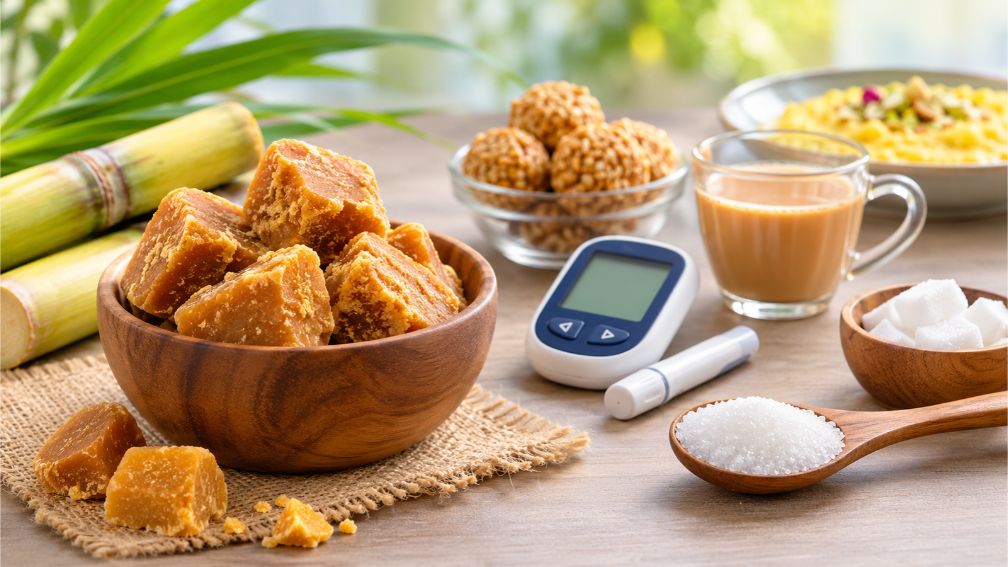
Jaggery is often seen as a more natural alternative to white sugar, but that does not automatically make it a better choice for someone with diabetes. It still provides sugar and carbohydrates that can affect blood glucose.
The more useful approach is to look at total added sugar across the day. This also connects with the wider awareness encouraged around World Diabetes Day, where the focus is on understanding everyday sugar intake and making more informed choices.
Jaggery is a traditional sweetener usually made from sugarcane juice or palm sap. In Indian kitchens, it is commonly used in chikki, laddus, halwa and several regional dishes. Its colour, flavour and texture depend on how it is prepared.
Although jaggery is less refined than white sugar, it is still a sugar-based sweetener. This matters when the aim is to reduce everyday added sugar rather than simply replace one form of sugar with another.
Jaggery is not automatically a better choice for diabetes because it is natural or less processed. Replacing a spoon of white sugar with the same amount of jaggery does not make a food or drink sugar-free.
What matters more is how much added sugar is being used overall. If sweetness is still preferred in selected foods or drinks, a low-calorie sweetener from Sugar Free may be considered instead of simply replacing white sugar with jaggery.
People with diabetes should look at jaggery as an added sweetener rather than a health food. It may contain small amounts of minerals, but these do not cancel out its sugar content or its effect on blood glucose.
Tea and coffee are common places where jaggery or regular sugar may be added every day. To reduce this added sugar, you can use Sugar Free Gold+ instead of regular sugar or jaggery.
Yes, jaggery can affect blood sugar because it contains carbohydrates in the form of sugars. The amount eaten makes a difference. A small piece of jaggery does not contribute the same amount as a large serving of a jaggery-based dessert.
It is also worth noticing how often jaggery appears throughout the day. Tea, homemade sweets, chikki and festive foods can all add to total sugar intake, even when each serving looks small.
Palm jaggery comes from palm sap rather than sugarcane, but the source does not make it free from sugar or carbohydrates. The quantity eaten still needs attention.
For a stevia-based option, you can use Sugar Free Green in selected foods or drinks instead of assuming palm jaggery is automatically a better choice. Individual dietary needs should still guide portions and overall intake.
The darker colour of black jaggery does not automatically make it better for blood glucose. It may look less processed or more traditional, but it still contributes sugar to the diet. Rather than choosing jaggery by colour, focus on quantity and frequency.
For recipes that need sweetness, you can use Sugar Free Natura where reducing regular added sugar is the aim. You can also try our Sugar Free Makhana Kheer recipe, made with Sugar Free Natura, while keeping the serving size sensible.
There is no particular type of jaggery that can simply be called a good choice for diabetes. Sugarcane jaggery, palm jaggery and darker varieties can all contribute sugar to the diet. Instead of searching for a diabetic jaggery, it may be more useful to notice where sweetness appears throughout the day.
This reflects a practical “managing sugar” approach: understand the regular sources, reduce them where suitable and avoid assuming that one natural sweetener is automatically healthier than another.
Jaggery and refined sugar are processed differently, but both can affect blood glucose.
| Factor | Jaggery | Refined Sugar |
| Processing | Less refined | More refined |
| Common source | Sugarcane or palm sap | Usually sugarcane |
| Effect on blood glucose | Can raise it | Can raise it |
| Use in diabetes | Portion needs attention | Intake needs attention |
| Practical point | Not a free substitute | Still an added sugar |
Managing sweet cravings does not mean removing every sweet taste. It may be more practical to start with the sources that appear most often.
You can:
For an occasional chocolate craving, you can try Sugar Free D’lite or our Sugar Free Chocolate Mousse recipe, made with D’lite Dark Chocolate. Keep the serving sensible and consider it within the rest of the meal.


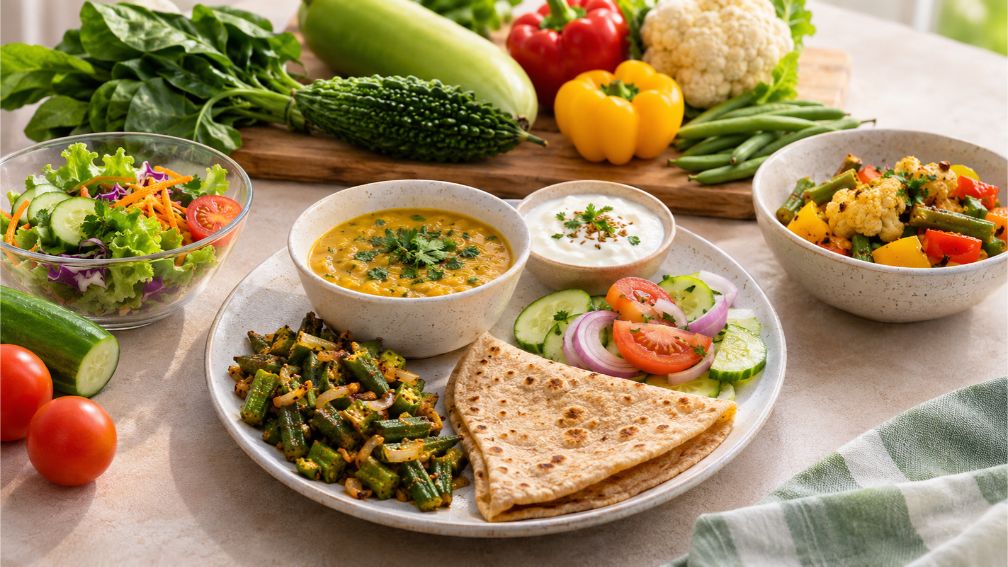
Vegetables can make diabetes-friendly meals easier to plan because they add fibre, volume, vitamins and minerals without making the plate feel restrictive. Indian kitchens already offer practical choices, from palak and bhindi to lauki, beans and cauliflower.
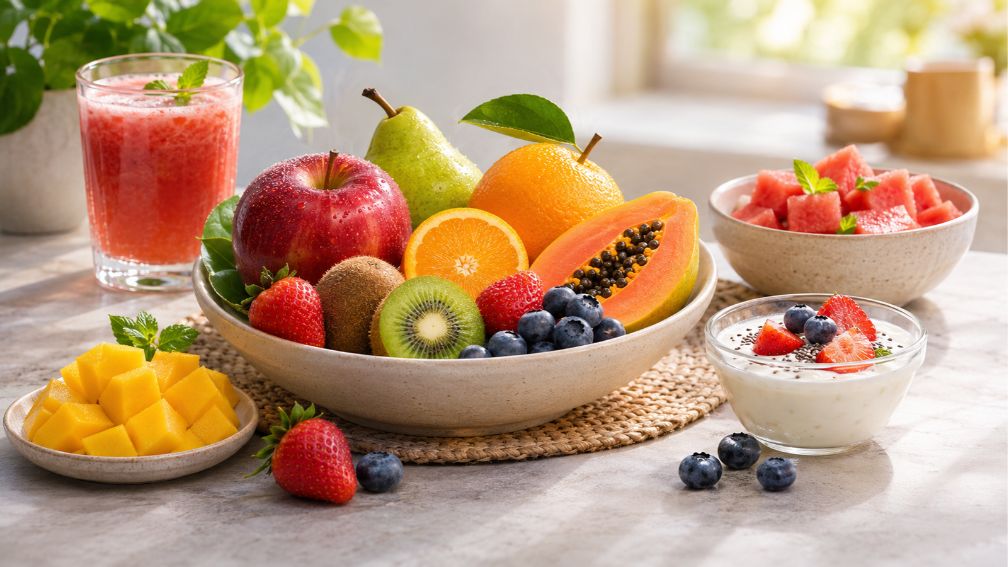
Fruit does not have to disappear from the diet just because someone has diabetes. Whole fruits provide fibre, vitamins, minerals and natural sweetness.
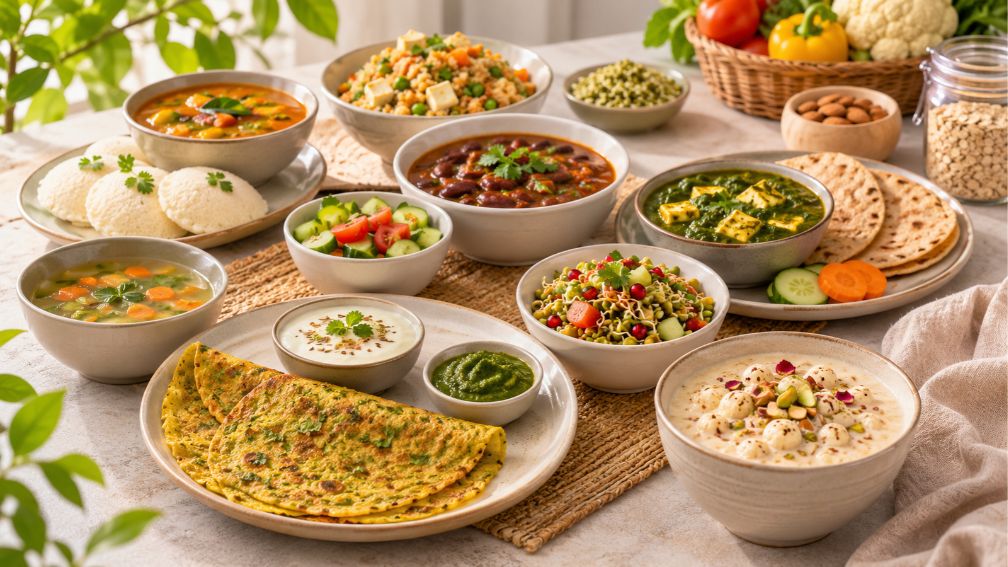
Vegetarian meals can fit comfortably into a diabetes-friendly routine when the plate includes enough fibre, protein and sensible portions of carbohydrates. Indian kitchens already offer useful choices through dal, vegetables, curd, paneer, sprouts, beans and whole grains.