Loading...
Type 2 diabetes does not always announce itself clearly. A person may feel fine while blood glucose slowly rises. The condition develops when the body stops responding to insulin as effectively as it should.
Over time, the pancreas may also struggle to make enough insulin. Because these changes can happen gradually, understanding the condition, possible symptoms and the testing process can make it easier to know when medical attention may be needed.
After a meal, some food is broken down into glucose. Insulin helps move this glucose from the bloodstream into the cells, where the body can use it for energy. In Type 2 diabetes, the cells become less responsive to insulin.
The pancreas may initially produce more insulin to compensate, but this may not be enough over time. Glucose can then remain in the blood, causing blood sugar levels to rise.
Type 2 diabetes means the body is not using insulin in the usual way. Insulin may still be present, but the cells do not respond to it properly. This is known as insulin resistance. It is a long-term condition, so care may involve regular medical follow-up, physical activity, food choices and medicines when prescribed.
Food habits are also part of day-to-day management. Reducing regular added sugar where suitable can be one practical step, and Sugar Free can help with this in selected foods and drinks while the overall diet remains balanced.
There is no single cause that explains every case. Family history, increasing age, excess body weight, low physical activity and a history of gestational diabetes can all affect risk. Some people may also develop Type 2 diabetes without obvious risk factors.
Sugar itself is not the sole cause of Type 2 diabetes. However, regularly consuming more energy than the body needs can contribute to weight gain, which may increase risk. This is why overall eating patterns, physical activity and other individual risk factors matter more than one food alone.
Some people do not notice anything unusual at first. Others may develop symptoms gradually.
Common signs include:
These symptoms may also occur for other reasons. If they continue or appear together, it is better to discuss them with a healthcare professional rather than trying to diagnose the condition yourself.
Repeated thirst, frequent urination, tiredness or blurred vision may be worth checking. Type 2 diabetes can also develop without obvious warning signs, so routine testing may be useful for people with known risk factors.
World Diabetes Day also encourages people to “understand their sugar risk early”. This can mean paying attention to risk factors and discussing recommended screening with a healthcare professional instead of waiting for clear symptoms.
Blood glucose numbers are interpreted according to when the test is taken. A fasting plasma glucose level of 126 mg/dL or higher falls in the diabetes range. A two-hour value of 200 mg/dL or higher during an oral glucose tolerance test also falls within that range.
For many adults with diabetes, general targets may be 80 to 130 mg/dL before meals and below 180 mg/dL one to two hours after eating. Individual targets can differ, so a healthcare professional should guide them.
Doctors do not diagnose Type 2 diabetes from symptoms alone. Tests may include fasting plasma glucose, HbA1c or an oral glucose tolerance test. HbA1c provides an idea of average blood glucose over the previous two to three months.
Early awareness can help people understand when further testing may be needed. As part of our WDD initiative, Sugar Free’s AI-enabled face scan can support sugar-risk awareness. It is an awareness tool and does not replace blood tests, medical advice or a professional diagnosis.
There is no single routine that suits everyone. Management may include prescribed medicines, regular movement, blood glucose monitoring and balanced meals. The plan depends on glucose levels, other health conditions and medical advice.
Food choices are also part of everyday managing sugar. To reduce regular added sugar in home-cooked dishes or desserts, you can use Sugar Free Natura where suitable. You can also try our Sugar Free Makhana Kheer recipe for a familiar dessert without regular added sugar.
Food does not need to become complicated after diagnosis. A balanced plate can include vegetables, protein and a measured portion of carbohydrates. Sweetened beverages and foods high in added sugar are better kept limited.
For tea or coffee, you can use Sugar Free Gold+ instead of regular sugar. A stevia-based option such as Sugar Free Green can also be used in selected foods or beverages. You can try our Sugar Free Hot Chocolate recipe for an occasional sweet drink.
The complete routine should still include suitable portions, physical activity, prescribed medicines, monitoring and regular medical advice.


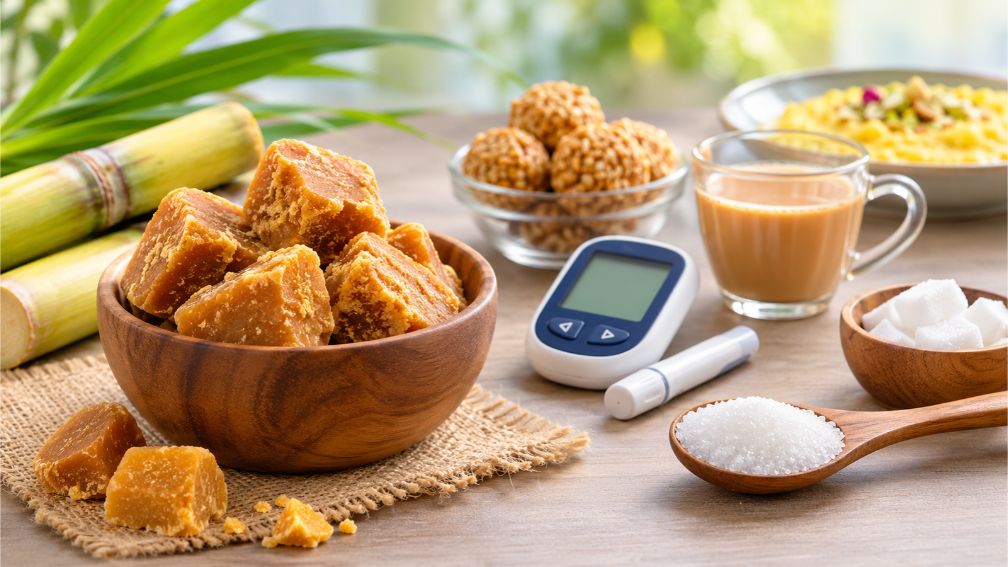
Jaggery is often seen as a more natural alternative to white sugar, but that does not automatically make it a better choice for someone with diabetes. It still provides sugar and carbohydrates that can affect blood glucose.

Vegetables can make diabetes-friendly meals easier to plan because they add fibre, volume, vitamins and minerals without making the plate feel restrictive. Indian kitchens already offer practical choices, from palak and bhindi to lauki, beans and cauliflower.

Fruit does not have to disappear from the diet just because someone has diabetes. Whole fruits provide fibre, vitamins, minerals and natural sweetness.