Loading...
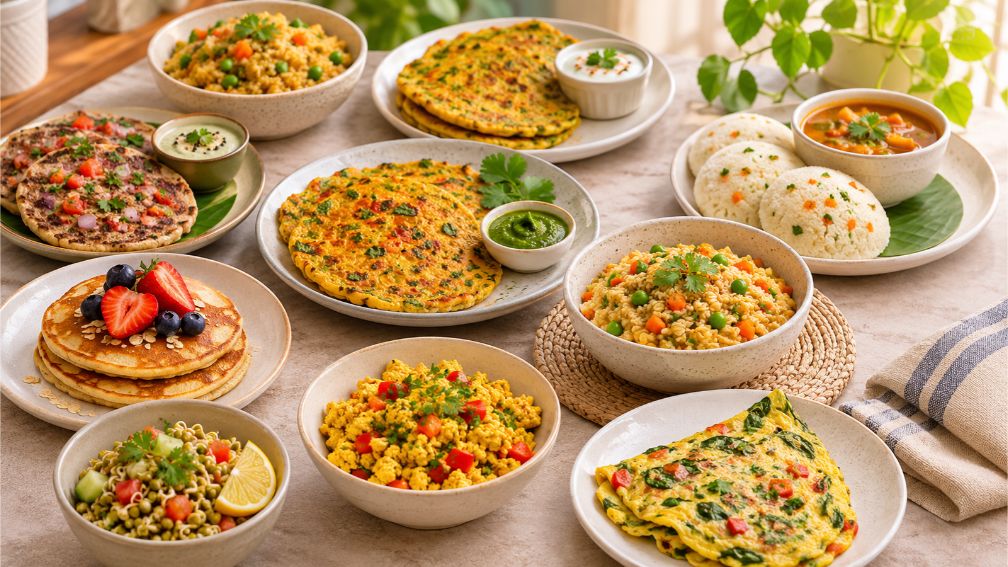
Eating for diabetes does not mean leaving familiar Indian meals behind. Everyday dishes can still fit into a balanced routine when portions, ingredients and cooking methods are handled with care.
A good meal usually brings together vegetables, protein, fibre and a measured amount of carbohydrates. Added sugar can also be reduced where possible. This guide looks at practical diabetic recipes for breakfast, lunch, dinner and snacks, with simple ways to adapt everyday home food.
Diabetic recipes are meals planned with attention to the overall balance of the plate. Portion size, carbohydrates, fibre, protein and added sugar all matter. Dal, sabzi, curd, eggs, pulses, vegetables and whole grains can all be used in familiar combinations. Good diabetic food recipes should also suit the person’s health needs.
To reduce regular added sugar in selected foods or drinks, you can choose from our Sugar Free sweetener options according to the recipe or use. This is only one part of a balanced eating routine.
When you choose a diabetes-friendly recipe, do not judge it only by whether it contains sugar. The complete plate matters too.
Useful diabetic diet recipes should also be realistic. Simple food made with familiar ingredients is easier to continue. This also supports our wider World Diabetes Day focus on ‘managing sugar’ in everyday life by noticing where added sugar enters your meals without losing sight of the complete plate.
Breakfast does not need to be heavy to feel satisfying. Familiar Indian dishes can work well when prepared with balanced ingredients and sensible portions.
You may consider:
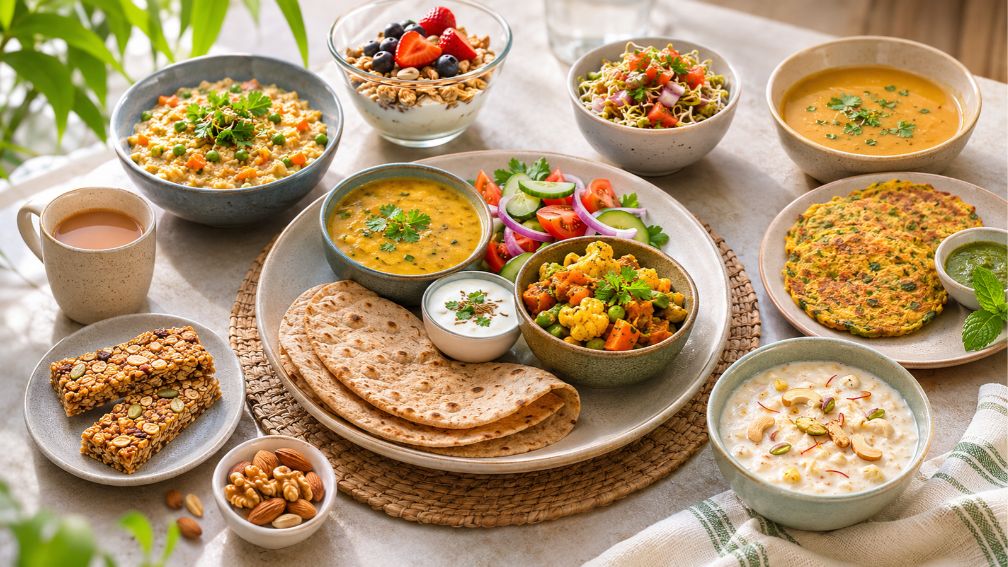
For something that can be prepared ahead, the Sugar-Free Granola Bars recipe combines nuts and seeds and uses Sugar Free Natura for sweetness. Portions should still be planned according to individual dietary needs.
Lunch can stay close to a regular Indian home meal. The main difference is how the plate is put together and served.
A simple lunch may include:
Indian diabetic recipes are often easier to follow when the food is already part of the household menu. There is usually no need to prepare something completely different for one person.
Dinner can follow a similar pattern to lunch, although many people prefer a lighter meal at night. Easy diabetic recipes may include vegetable khichdi with curd, dal with a measured serving of roti, paneer with vegetables or soup with a suitable protein source.
Keep the meal simple rather than overloaded with extras. Large portions of refined carbohydrates and frequent desserts can add more than needed.
Snacks can be useful when there is a long gap between meals. Simple options may include roasted chana, a small portion of nuts, plain curd, sprouts chaat or cut vegetables with a light dip. Whole fruit may also fit when the portion suits the meal plan.
Tea and coffee are another common source of added sugar. If sweetness is still preferred, Sugar Free Gold+ can be considered for selected beverages instead of regular sugar. The product is designed for use in drinks such as tea and coffee as well as selected foods.
Traditional Indian food does not have to be completely changed. Sometimes a few small adjustments are enough. A stevia-based option such as Sugar Free Green can also be used in suitable foods and beverages.
You can:
For a familiar dessert, the Sugar Free Makhana Kheer recipe uses Sugar Free Natura instead of refined sugar. It is one example of how a traditional recipe can be adjusted without changing the whole family menu.
The main focus should stay on sensible portions, balanced meals and practical choices that can continue over time. Managing sugar is not about one ingredient alone.


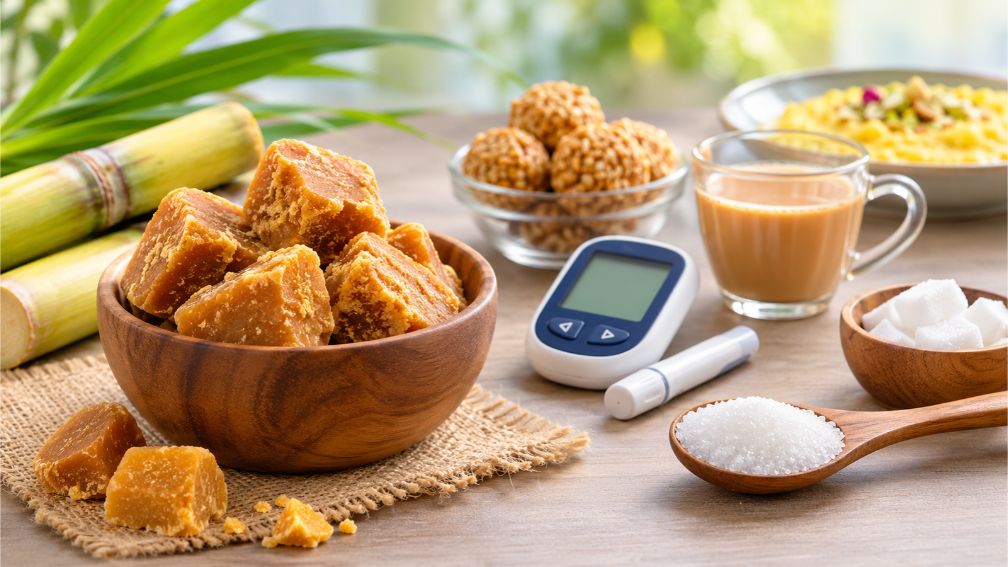
Jaggery is often seen as a more natural alternative to white sugar, but that does not automatically make it a better choice for someone with diabetes. It still provides sugar and carbohydrates that can affect blood glucose.
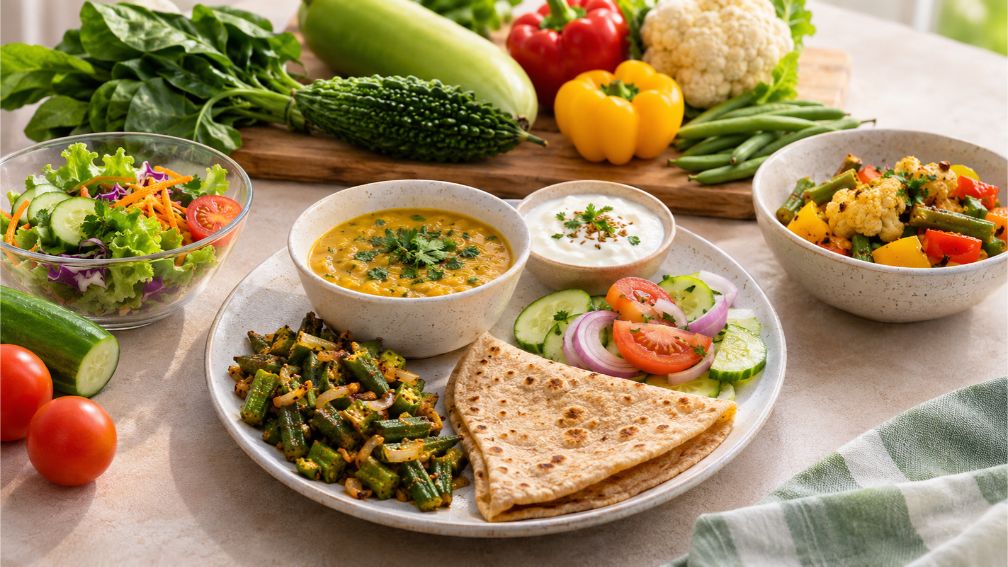
Vegetables can make diabetes-friendly meals easier to plan because they add fibre, volume, vitamins and minerals without making the plate feel restrictive. Indian kitchens already offer practical choices, from palak and bhindi to lauki, beans and cauliflower.
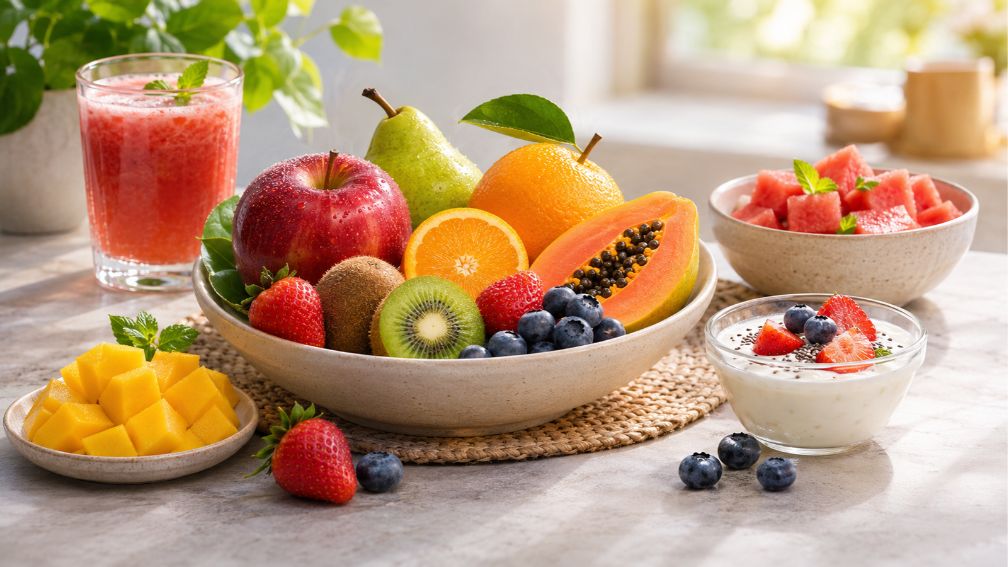
Fruit does not have to disappear from the diet just because someone has diabetes. Whole fruits provide fibre, vitamins, minerals and natural sweetness.