



Loading...

Your blood sugar reading shows how your body is handling glucose throughout the day. When you know the usual fasting and after-meal ranges, it becomes easier to judge whether a number is expected or needs attention.
This guide breaks down standard values, explains HbA1c in simple terms, and shows how targets may differ with age. You will also get a clear age-wise chart and a quick section on typical goals for people living with diabetes.
Blood sugar, or glucose, is the fuel your cells use. Carbs turn into glucose, and insulin helps move it from the blood into muscles and organs.
Keeping numbers in range lowers the chance of long-term damage to the eyes, kidneys, nerves, and heart. It also supports steadier energy and fewer cravings.
Most guidelines use fasting and 2-hour after-meal readings, with HbA1c as the longer view. For diagnosis cut-offs, clinicians often refer to standards.
Fasting is taken after 8 hours without calories, so it reflects overnight control. HbA1c reflects your average over roughly 2 to 3 months, and helps track long-term patterns beyond daily ups and downs.
Click Here to check How to Keep Your Blood Sugar Levels in Control?
This normal blood sugar levels chart uses common reference ranges for people without diabetes. Lab cut-offs stay the same, but life stage affects daily readings.
Use these mg/dL ranges as a quick reference.
Age group |
Fasting blood sugar (mg/dL) |
After meal blood sugar (mg/dL, 2 hours) |
Normal range indicator |
| Children (below 12 years) | 70 to 99 | Under 140 | Typical range |
| Teenagers | 70 to 99 | Under 140 | Typical range |
| Adults (18–59 years) | 70 to 99 | Under 140 | Typical range |
| Seniors (60+ years) | 70 to 99 | Under 140 | Typical range |
Here’s how typical blood sugar ranges may look across different age groups.
Readings can swing faster with illness or missed meals. If symptoms persist, get medical advice rather than relying only on home readings.
Sleep changes, stress, and frequent snacking can push numbers up. Repeat highs are a reason to review habits and consider screening.
Meal size, added sugar, inactivity, and excess weight are common drivers. A smaller rice portion and a post-dinner walk often help.
Targets may be personalised to reduce the risk of low blood sugar, especially if appetite and meal timing vary.
If you have diabetes, normal usually means safe targets that are realistic for your age and treatment. Goals can change with pregnancy, illness, or frequent lows.
Targets are often given for before meals, 2 hours after meals, and HbA1c, then adjusted based on medicines and routine.
Targets vary, so use this as a starting point.
Measure |
Common adult target |
Notes |
| Before meals | 80 to 130 mg/dL | Personalised by risk of lows |
| 2 hours after meals | Under 180 mg/dL | Depends on the meal and activity |
| HbA1c | Around 7% or as advised | Not one size fits all |

Match the number to timing and symptoms.
Small daily habits around food, movement, and sleep help keep your readings steady and within target.
Click Here to check Which Foods to Avoid for Diabetes Patients?
If you do not have diabetes, check during routine health tests or sooner if you have risk factors. If you have diabetes, your schedule depends on treatment, but fasting and post-meal checks help spot patterns. Also, check more often during illness, travel, high-stress days, or medicine changes. Keep a simple log with timings and meals to share with your doctor.
Use a normal blood sugar levels chart by age to understand ranges, then focus on portion control, daily movement, sleep, hydration, and smarter sweetening choices that cut added sugar and empty calories.
Click Here to check How to Control Diabetes?
It depends on timing. After meals, it may be acceptable for some people, but fasting at 135 mg/dL is usually high and needs medical review.
Thirst, frequent urination, tiredness, blurred vision, and headache are common warning signs.
Yes, fasting 140 mg/dL is above the diabetes diagnostic cut-off and should be discussed with a doctor.
Yes. Choose a balanced meal with vegetables and protein, keep carbs measured, and recheck later as advised.



After extra sweets or sugary drinks, you may feel heavy, tired, or unusually hungry. A short reset can help you reduce added sugar, cut empty calories, and return to steadier meals.

A 14-day reset helps you realistically reduce added sugar, without changing the core of your Indian meals. The main sources are usually sweetened chai or coffee, packaged drinks, biscuits, and frequent desserts that add empty calories.
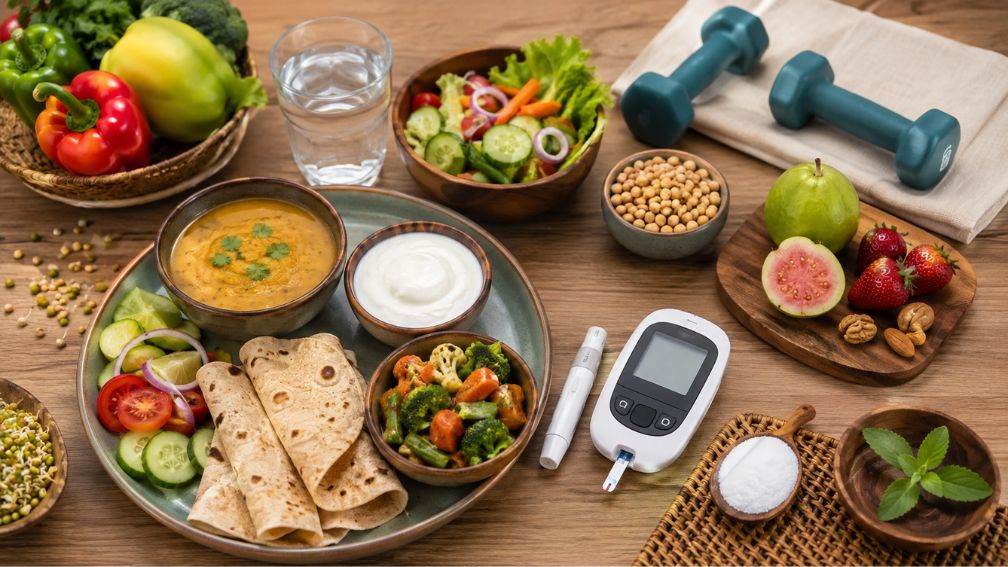
Living with diabetes does not mean you have to give up sweet flavours completely. A sugar-free lifestyle is mainly about reducing added sugar from daily habits like sweetened chai, desserts, and packaged snacks that add empty calories and can cause bigger swings.