


Loading...
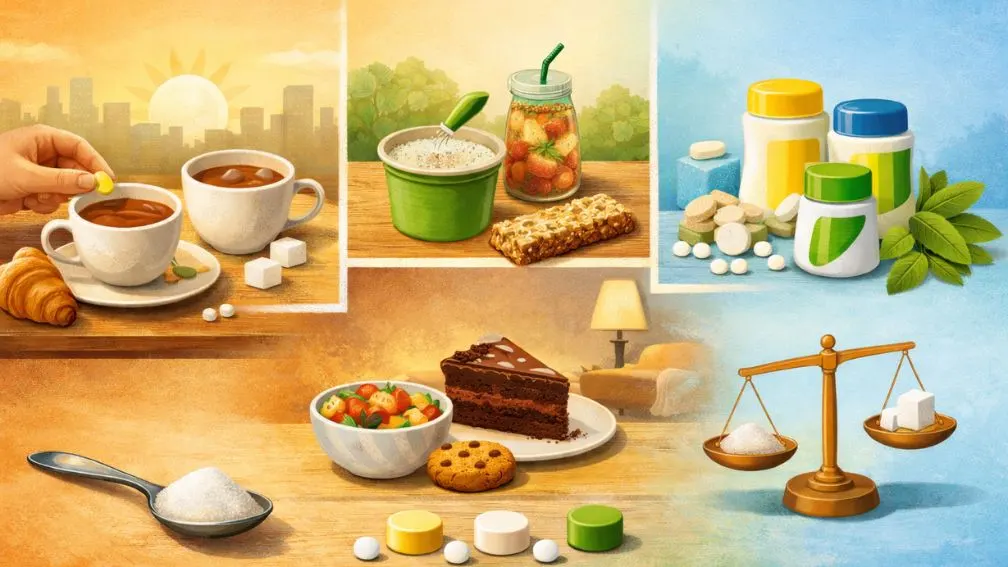
Daily energy feels easier to manage when added sugar is not part of every routine. Choosing sugar free foods more often can help reduce sugar calories while still allowing sweetness in your day. When sweetening is measured and predictable, many people find it easier to stay steady through busy workdays and weekends, without the typical highs and dips that follow frequent sugary picks.
Sugar Free notes that sugar is present in many processed foods and can be absorbed quickly due to a high glycaemic index rating. Over time, higher blood sugar levels can put stress on the body and may reduce insulin sensitivity. It also highlights that the World Health Organisation advises keeping added sugar below 10 percent of daily energy intake.
It adds that one teaspoon of sugar contains about 20 calories, which shows how sugar in tea, coffee, and routine snacks can add up quietly. When sweetened drinks and sweet snacks repeat through the day, you may end up consuming extra calories without feeling satisfied. That often makes energy feel uneven because you keep needing something quick again.
Sugar Free positions sweeteners as sugar substitutes that aim to replace sugar in food, not the sweetness. The brand explains that sweeteners are derived from molecules such as aspartame, sucralose, and steviol glycoside, and are used in small quantities to provide sweetness with negligible calories.
It also presents these sweeteners as suitable for tabletop use as well as cooking and baking. In a daily routine, sugar free foods fit best when they keep sweetness controlled and consistent. The goal is not to add more sweet taste. The goal is to stop added sugar from becoming automatic in every cup, snack, or dessert.
If your energy feels inconsistent, the first step is to identify where sugar repeats daily. For many people, it is tea and coffee. Those cups are frequent, and small additions add up fast.
Chai and coffee are common repeat sources. Sugar Free suggests starting your day with a Sugar Free sweetener in your morning tea or coffee so sweetness is measured rather than guessed. When the amount stays fixed, the routine becomes easier to repeat without slowly increasing sweetness over time.
Sugar can sneak into flavoured dairy, packaged drinks, and snack pairings. Sugar Free suggests adding Sugar Free Green to plain yoghurt as a way to keep taste pleasant without adding sugar calories. The same idea applies to home-made chilled drinks where sweetness can creep in more than you realise when you sweeten by taste.
Evenings are where sugar often returns through desserts and sweet snacks. Sugar Free encourages using sweeteners and recipe options to enjoy familiar flavours without added sugar, so sweet moments feel planned rather than impulsive.
Sugar Free highlights that sweeteners allow you to keep sweetness with negligible calories, which supports calorie-conscious habits. The brand also shares portion comparisons that encourage measured use. It notes that one pellet of Sugar Free Gold+ is equivalent to the sweetness of one teaspoon of sugar, with 0.36 calories.
It also lists one pellet of Sugar Free Natura at 0.30 calories and one pellet of Sugar Free Green at 0.29 calories, each matching the sweetness of one teaspoon of sugar. The main benefit of these measured formats is consistency. When sweetness is controlled, it becomes easier to avoid the pattern of sweetening more when tired, stressed, or craving something quick.
Pick the option that fits your routine so you can actually use it daily, whether you need it for beverages, cooking, or tabletop use.
Sugar Free Natura is made from sucralose and is positioned for cooking and baking sweet dishes, along with hot or cold beverages such as tea or coffee. It is described as heat-stable, which makes it suitable for recipes that need heating, including desserts and toppings.
Sugar Free Gold+ uses sucralose and includes chromium. Chromium trivalent is described as a mineral known to support maintenance of normal blood glucose levels and macronutrient metabolism. It also described as remaining stable at high temperatures, which supports use in hot drinks and recipes.
Sugar Free Green is made from a natural source of the stevia plant, also known as meethi tulsi in India. Steviol glycoside is described as a non-caloric, non-nutritive sweetener. It is positioned as a tabletop sweetener for everyday beverages at home, in the office, and in coffee or tea shops.
Buy Sugar Free Sweeteners from Amazon and Zydus India Website
Sugar Free describes sucralose as about 600 times sweeter than sugar, which is why only a small amount is needed. It also notes that sucralose has been scientifically studied and analysed by the Joint FAO WHO Expert Committee on food additives and the European Food Safety Authority as part of safety evaluation. Stevia’s sweetness comes from the stevia plant, and steviol glycoside is described as a non-caloric, non-nutritive sweetener used for tabletop sweetening.
Small daily swaps work best because repetition is what builds habits.
These choices work because they reduce added sugar in the moments that repeat most often.
Sugar Free mentions that overconsumption of any ingredient can be harmful, so moderation matters. It also notes that acceptable daily intake guidance is mentioned on packs for its sweetener variants, which helps keep usage measured.
Daily energy feels more manageable when added sugar stops being automatic. Start with the drink you repeat most, then improve the sweet moments that follow. With a measured approach and portion control, you can keep the sweetness you enjoy while cutting back on added sugar calories, which many people find easier to sustain day after day.

A sugar free diet is mainly about reducing added sugar consumption in the things you repeat daily, like tea, coffee, desserts, and packaged foods. Cutting these frequent sugar additions helps reduce empty calories from sugar and makes your routine easier to manage, which can support your belly fat and weight goals over time.

Switching to sugar-free habits mainly means reducing added sugar that sneaks into beverages, desserts, and packaged foods. When you cut repeated sugar moments, you reduce excess sugar intake and make your routine more consistent.
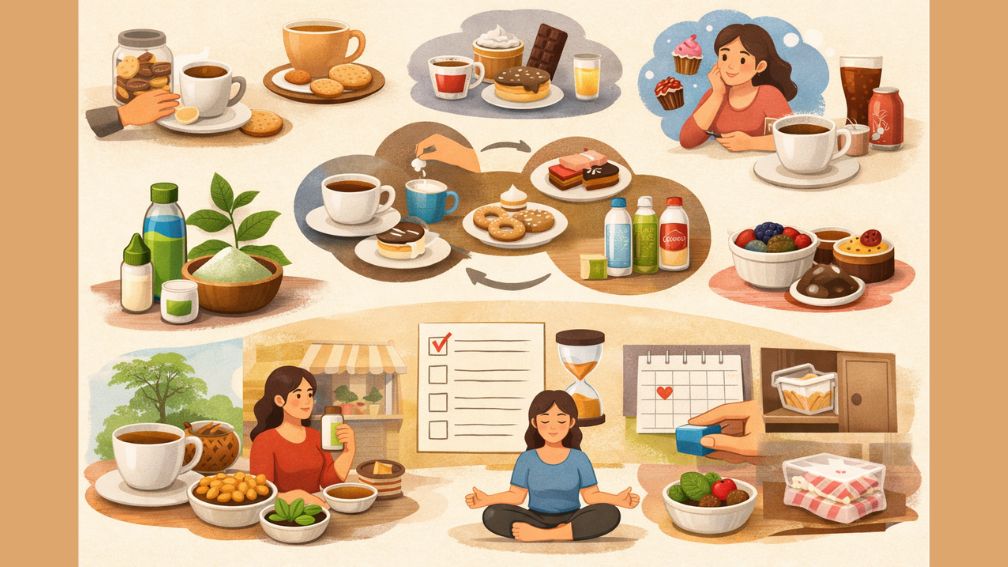
Sugar cravings are rarely about weak willpower. In most cases, they build up through routine.